Lidl
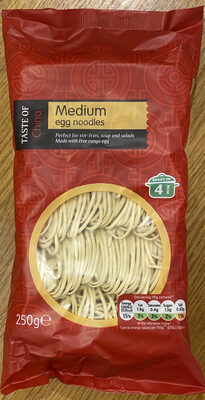
Medium Egg Noodles
191.0 g
Sold at Lidl
Suits: flare-friendly (low residue), onion- and garlic-free, dairy-free
Not suitable: no high-FODMAP ingredients found, gluten-free
Ingredients from Open Food Facts, last updated 18 November 2026. Checked against our rules on 22 November 2026.
Diet check
- Flare-friendlySuitable
It has 2 g of fibre per 100 g.
- No onion or garlicSuitable
- High-FODMAP ingredientNot suitable
Contains wheat flour.
- Contains glutenNot suitable
Contains durum, wheat flour.
- Dairy-freeSuitable
May contain milk.
No high-FODMAP ingredients alternatives

M&S Eat Well
Rice Noodles
M&S

Tesco
Rice Noodles
Tesco

Sainsbury's
Rice Noodles
Sainsbury's

Waitrose
Rice Noodles
Waitrose

Sainsbury's
Rice noodles
Sainsbury's

Asda
Rice noodles
Asda

Mams
Instant rice vermicelli noodles

KO-LEE
Ko-Lee Finest Rice Vermicelli Noodles
Questions about Medium Egg Noodles
Is Lidl Medium Egg Noodles onion- and garlic-free?
Yes, based on its ingredients: none of them are onion, garlic, shallot or leek.
Is Lidl Medium Egg Noodles low FODMAP?
Probably not for the strict stage of a low FODMAP diet: it contains wheat flour.
Is Lidl Medium Egg Noodles gluten-free?
No. It contains durum, wheat flour.
Is Lidl Medium Egg Noodles OK during a Crohn’s or colitis flare?
It fits low-residue guidance: 2 g of fibre per 100 g and no high-residue ingredients such as wholegrains, seeds, nuts or chunky vegetables. Follow your IBD team’s advice on what to eat during a flare.
Is Lidl Medium Egg Noodles dairy-free?
Yes: its ingredients include no milk, cream, butter, cheese, whey or lactose. The label says it may contain traces of milk.
Ingredients
Soft Wheat Flour, Durum Wheat Flour, 4% Free Range Egg, Salt, Acidity Regulator: Potassium Carbonates.
Nutrition per 100 g
| Energy | 158 kcal |
|---|---|
| Fat | 1 g |
| of which saturates | 0.2 g |
| Carbohydrate | 30.4 g |
| of which sugars | 0.8 g |
| Fibre | 2 g |
| Protein | 5.9 g |
| Salt | 0.3 g |
Related articles

Shopping for Crohn's disease: a basket that works for you
There is no single Crohn's diet. Here is how to shop when you are well, when you are flaring, and when your IBD team gives you specific advice.

How we check every ingredient list
What "suitable", "check the label" and "not suitable" mean on our product pages, where our data comes from, and its limits.

What "low residue" means and how we pick flare-friendly food
Low residue usually means low fibre. Here is what NHS dietitians include, how we decide a product is flare-friendly, and why some show "check the label".